
By Technical Staff | April 14, 2026
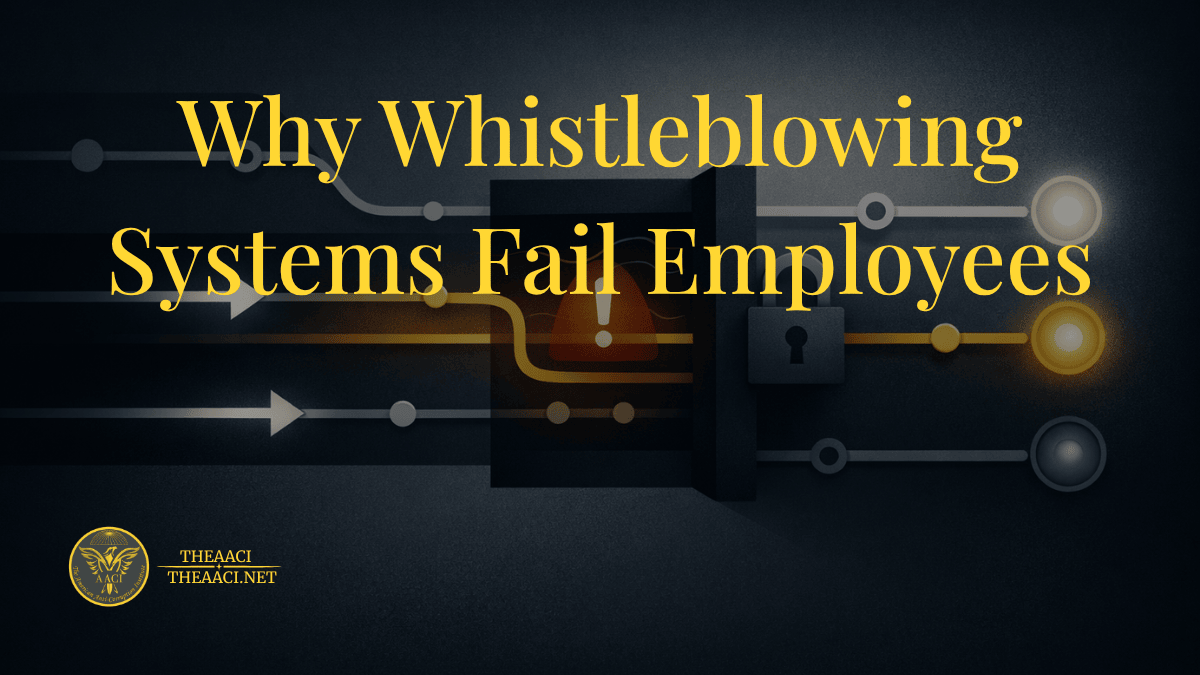
Most organizations do not fail because employees never see misconduct. They fail because employees do not trust what will happen if they speak.
That is the real weakness behind many whistleblowing failures.
On paper, many institutions appear prepared. They have a reporting channel, a policy, a hotline, a code of conduct, and a statement promising confidentiality or non-retaliation. None of that is enough by itself. Employees do not judge a whistleblowing system by what it says. They judge it by what it does to people who use it.
When employees believe that reporting will expose them, isolate them, damage their career, or quietly shield the wrongdoer, the system has already failed. It may still exist formally, but it has lost operational credibility.
This failure is often misunderstood. Leaders assume that a low number of reports indicates a healthy environment. That assumption is dangerous. Silence does not prove integrity. It often reflects fear, futility, learned distrust, or previous organizational betrayal.
A functioning whistleblowing system must do more than receive complaints. It must create confidence that concerns will be handled seriously, independently, and without retaliation. It must protect the reporter, not merely record the allegation. If the process is slow, opaque, politically influenced, or visibly biased toward management comfort, employees will notice. They always do.
The problem becomes more severe when employees believe that certain people are untouchable. Once workers conclude that senior management, influential colleagues, or high-performing insiders are protected from scrutiny, the reporting system begins to collapse from the inside. At that point, the institution is not merely failing to detect misconduct; it is also failing to prevent it. It is teaching employees that speaking up is unsafe or pointless.
That failure carries a cost. Corruption, fraud, harassment, manipulation, and internal abuse often continue longer when reporting channels are not trusted. By the time the matter becomes public, the institution is left managing not only the misconduct itself, but also the reputational damage of having ignored or discouraged earlier warnings.
Whistleblowing systems do not fail because they lack a phone number or an email address. They fail because institutions do not build the conditions that make reporting credible: Protection. Independence. Follow-through. Accountability. Visible seriousness. Those are the real foundations.
Organizations serious about corruption prevention should stop asking whether a whistleblowing channel exists and start asking whether employees believe it is safe, fair, and worth using.
Serious decision-makers should not guess on issues like these. Whistleblowing failures are not communications problems. It is a governance and corruption-risk problem. Gain the edge: The CACM self-study certification equips leaders with proven expertise in whistleblowing, internal control, governance, corruption prevention, fraud detection, and smart decision-making.