Technical staff | May 5, 2026
Many institutions appear well governed.
They have boards, committees, policies, charters, codes of conduct, risk registers, internal audit reports, compliance updates, and formal meeting minutes. On paper, everything looks organized: the structure is in place, the language is proper, and the reporting cycle continues.
But governance effectiveness is not proven by the existence of governance structures. It is proven by what those structures change, prevent, detect, correct, and hold accountable.
That distinction matters significantly.
Governance theatre begins when institutions perform the visible rituals of oversight without exercising real challenge. Meetings are held, but difficult questions are avoided. Reports are received, but weak assumptions are not tested. Policies are approved, but implementation is not examined. Internal control is discussed, but its effectiveness is not independently verified. Whistleblowing channels exist, but employees do not trust them. Risk assessments are presented, but exposure is not meaningfully measured.
Everything appears active. Very little, if any, is effective.
This is why governance theatre is dangerous and poses fundamental threats to the institution’s existence. It creates comfort for those inside the institution and credibility for those observing from outside. It allows leadership to point to formal structures as evidence of responsibility while avoiding the harder question: did governance actually influence behavior and reduce risk?
Effective governance is different because it does not depend on appearances. It relies on evidence, and it is always results-oriented.
A board exercising effective governance asks whether controls are “present and functioning”, whether management assertions are tested, validated, and verified, whether authority is matched with accountability, whether incentives distort judgment, and whether weak signals are escalated before they become scandals. It does not accept polished reporting as proof of control. It demands clarity, challenge, verification, and corrective action.
Governance theatre protects reputations until reality intervenes. However, governance effectiveness protects institutions before reality becomes public.
The difference is not cosmetic. It is operational and has serious strategic implications for all institutions’ operations.
An institution serious about corruption prevention should stop asking whether governance mechanisms exist and start asking whether they work. If the answer is unclear, governance may be more performative than effective. Therefore, Competent Questioning is a prerequisite for effective governance.
Developing the judgment to tell the difference is where anti-corruption competence becomes essential. Decision-makers cannot rely solely on titles, committees, and reporting cycles. They need proper and adequate knowledge to distinguish between structure and substance, comfort and control, and governance theatre and governance effectiveness.
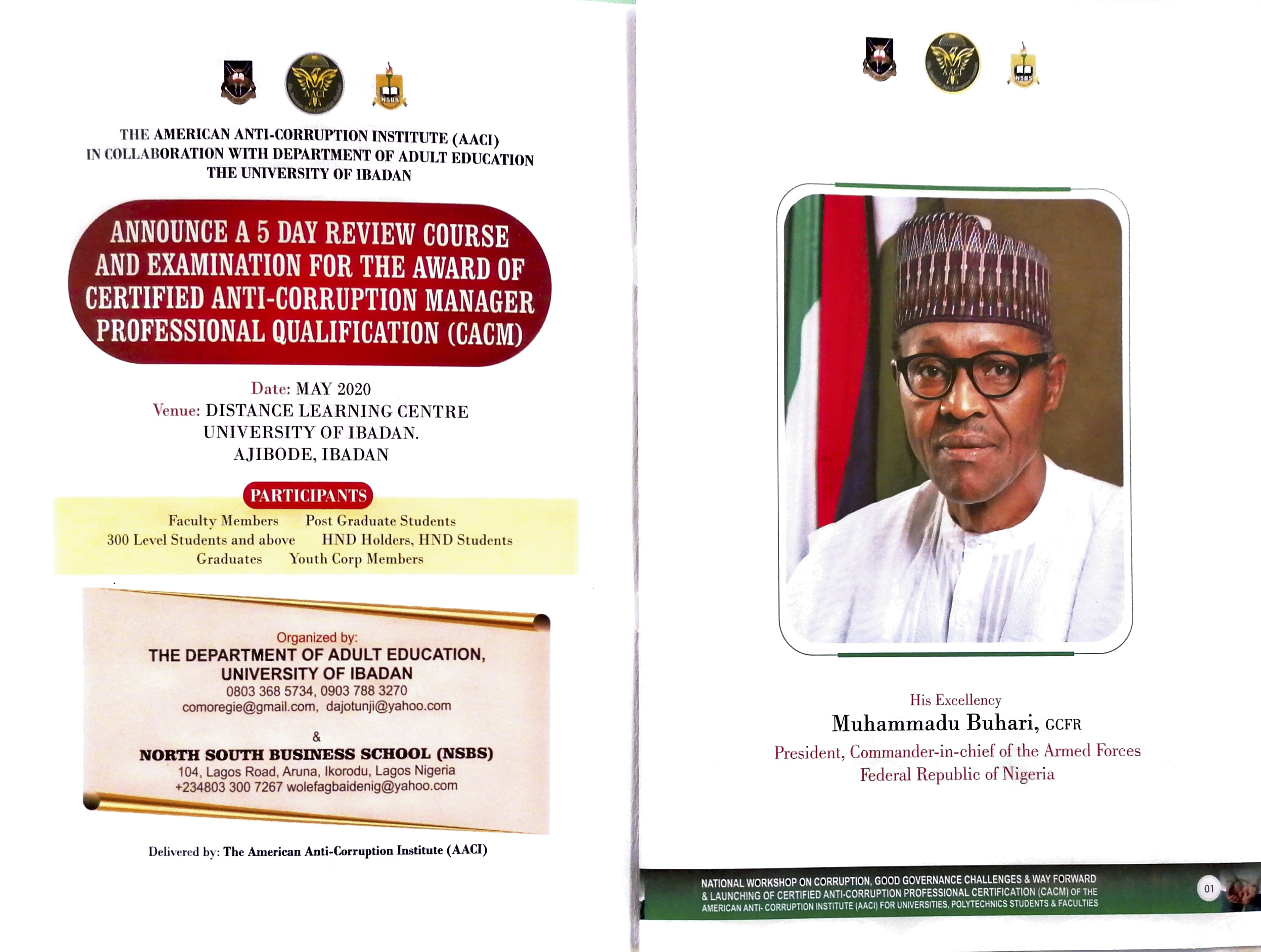
The CACM self-study pathway is designed to develop that disciplined anti-corruption judgment. It equips decision-makers to examine governance, internal control, accountability, whistleblowing, fraud risk, decision-making, and corruption prevention from a management perspective.
References
Source: Masoud, M. (2026) Competent Questioning: An Anti-Corruption Governance Concept. The American Anti-Corruption Institute (AACI). Available at: https://www.theaaci.net/Competent-Questioning (Accessed: May 5, 2026).