Mike J. Masoud | July 3, 2026
Governance failure does not always begin with silence.
Sometimes it begins with questions that sound responsible but fail to test the substance of what matters.
“Was it approved?”
“Was the policy followed?”
“Was the report submitted?”
“Did management review it?”
These questions may be useful, but they are often insufficient. They can confirm the appearance of the process without testing the quality, independence, evidence, or integrity behind that process.
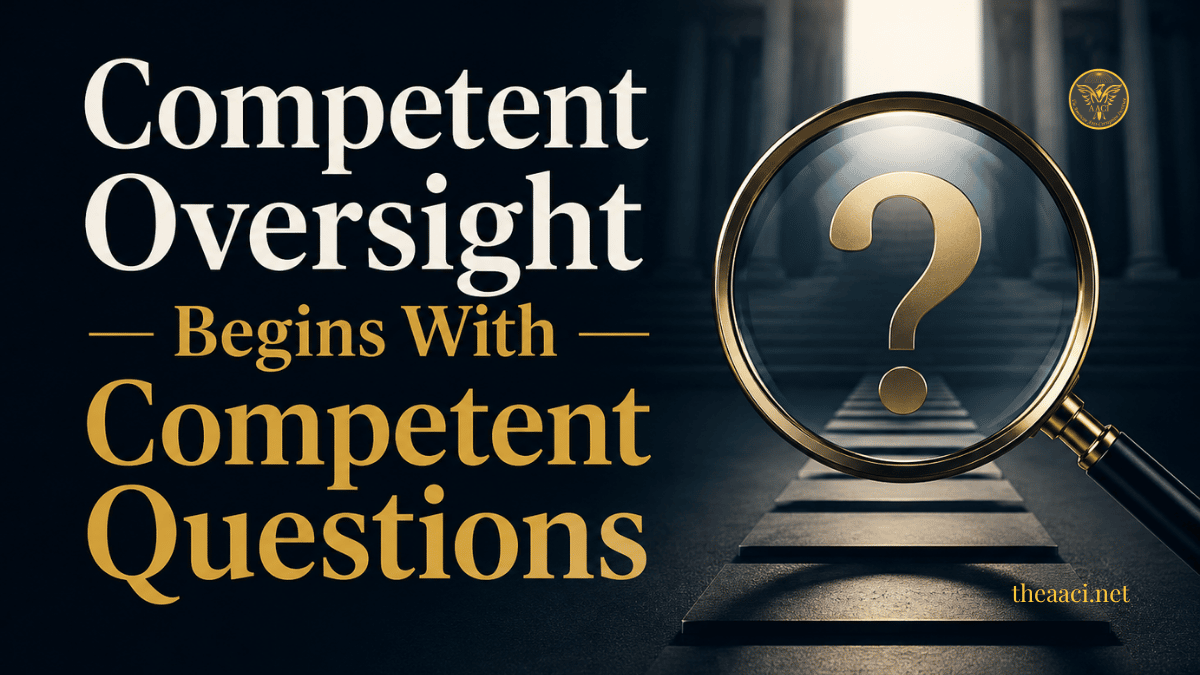
Competent Questioning is an AACI governance and anti-corruption concept that focuses on the disciplined ability of those entrusted to govern, manage, audit, regulate, or approve to ask clear, relevant, timely, and evidence-seeking questions.
The purpose is not to ask more questions for the sake of asking questions.
The purpose is to ask better questions before corruption risks mature into misconduct, loss, scandal, or institutional failure.
A competent question does not merely ask whether a transaction was approved. It asks whether the approval was independent, justified, documented, and free from conflicts of interest.
A competent question does not merely ask whether a whistleblowing system exists. It asks whether people trust it, whether the risks of retaliation are addressed, and whether reports are assessed with independence and seriousness.
A competent question does not merely ask whether internal controls exist. It asks whether those controls are designed, implemented, tested, and capable of reducing corruption exposure.
Institutions do not strengthen oversight by accepting formal answers too quickly. They strengthen oversight when those entrusted with authority develop the competence and discipline to challenge assumptions, seek evidence, and recognize warning signs.
That is the practical value of Competent Questioning.
Learn more about The AACI Concepts:
https://www.theaaci.net/Concepts