
December 17, 2025
The University as a Structural Actor in Fighting Corruption
Universities occupy a unique position in any society. They shape how future leaders think, reason, and exercise judgment long before those individuals assume positions of authority. In this sense, universities are not peripheral to the fight against corruption. They are foundational to it. Their influence lies not in enforcement or advocacy, but in shaping the intellectual and ethical infrastructure upon which public and private decisions are later made.
Fraud and corruption emerge and thrive in environments where decision-makers do not recognize the nature, dynamics, and controls of corruption. Therefore, a lack of smart anti-corruption decisions leads to higher business risks and losses. Universities are among the few institutions capable of addressing these conditions at their source by embedding analytical rigor, governance awareness, and integrity-based reasoning into education and research.
Knowledge as a Corruption Prevention Mechanism
Competence is a fundamental pillar in the fight against corruption. Students and faculty who lack a proper understanding of corruption, corruption risks, internal control, governance, anti-money laundering, blockchain technology and its impact on anti-corruption and internal control, artificial intelligence and its effective use in fighting corruption, and enforcement realities are ill-equipped to contribute meaningfully to prevention efforts. Such knowledge is essential. Otherwise, integrity remains a concept that is not translated into daily business and personal decisions. Corruption is also mischaracterized as a moral deviation rather than a systemic risk and is likely presumed to be the norm.
Equipping students and faculty with adequate anti-corruption knowledge strengthens their capacity to identify vulnerabilities, question ineffective internal control, ask smart anti-corruption questions, and understand the consequences of institutional failure. This is not about activism. It is about preparedness. Universities that invest in this capacity-building role contribute directly to the resilience of the communities and institutions their graduates will later serve.
A Principled Basis for Cooperation
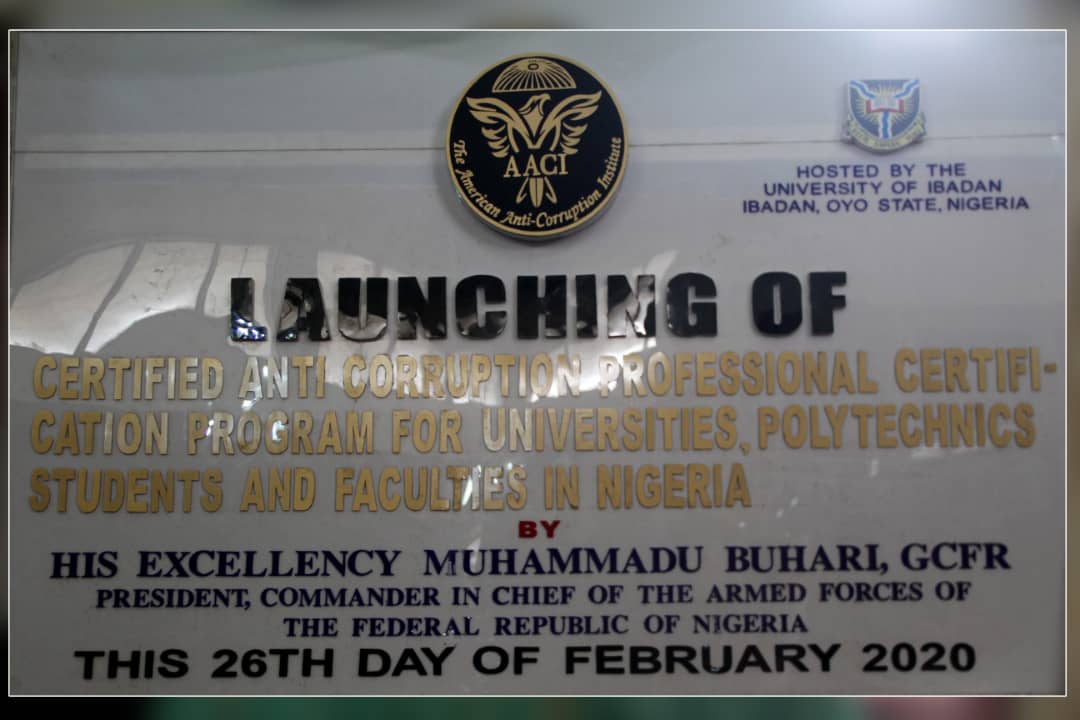
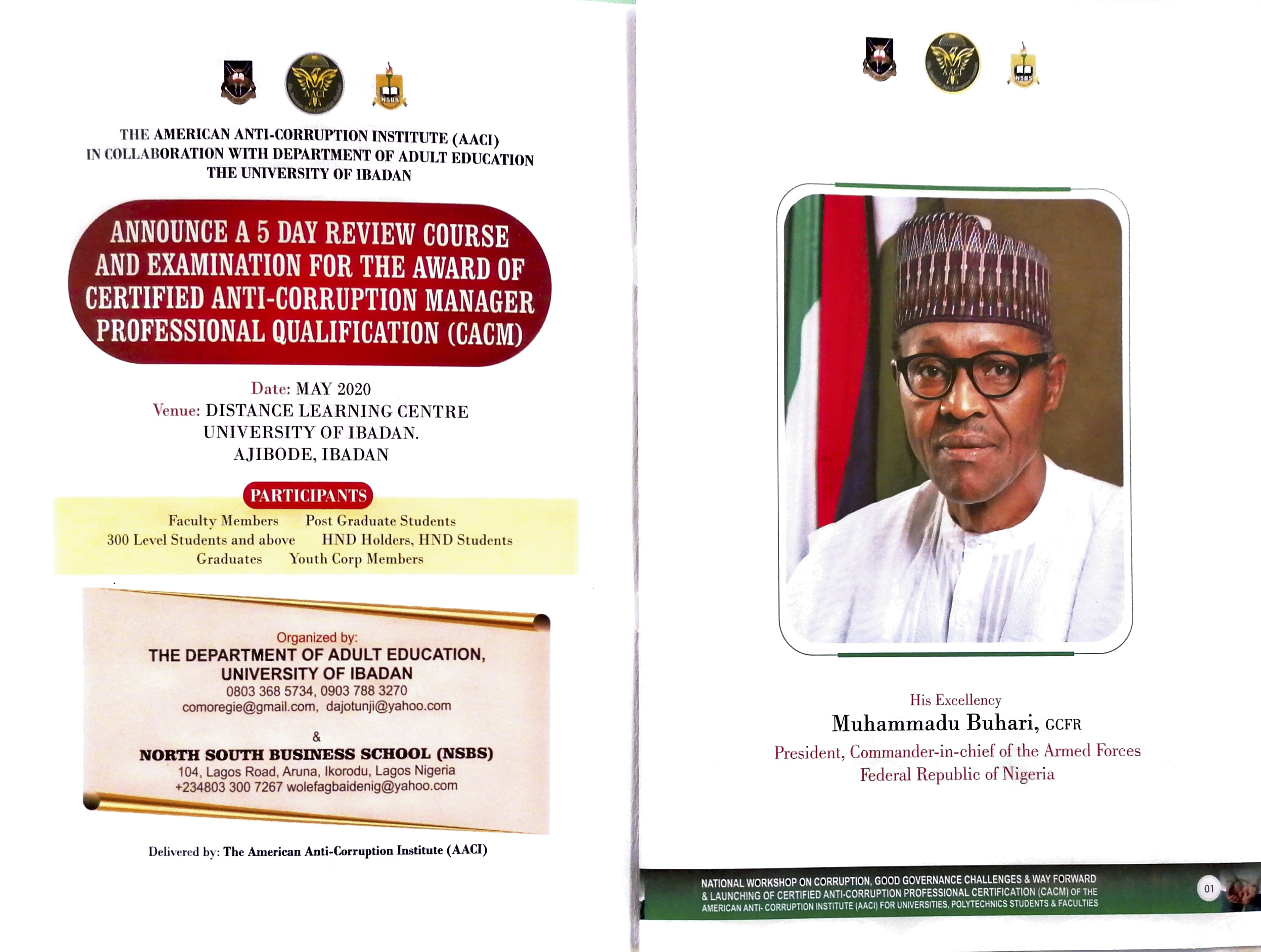
The American Anti-Corruption Institute (AACI) views cooperation with universities as a mission-aligned endeavor grounded in shared responsibility. Where universities seek structured pathways to engage students and faculty in corruption prevention, The AACI stands ready to cooperate through its established professional frameworks. The Certified Anti-Corruption Fellow (CACF) supports students in developing foundational competence, while the Certified Anti-Corruption Manager (CACM) is designed for faculty and senior professionals engaged in leadership, governance, and decision-making.
Such cooperation is not transactional. It establishes a mutual commitment to strengthening institutional integrity through education and professional development. As corruption continues to erode trust and stability globally, universities that take this responsibility seriously reinforce their role as stewards of the public good.
This image is an original visual created for institutional and educational purposes. It does not depict real individuals, events, institutions, or locations. Any visual elements are illustrative and symbolic in nature. The image is used to support thought leadership content and does not assert factual claims, endorsements, or representations.
© The American Anti-Corruption Institute (AACI). All rights reserved.